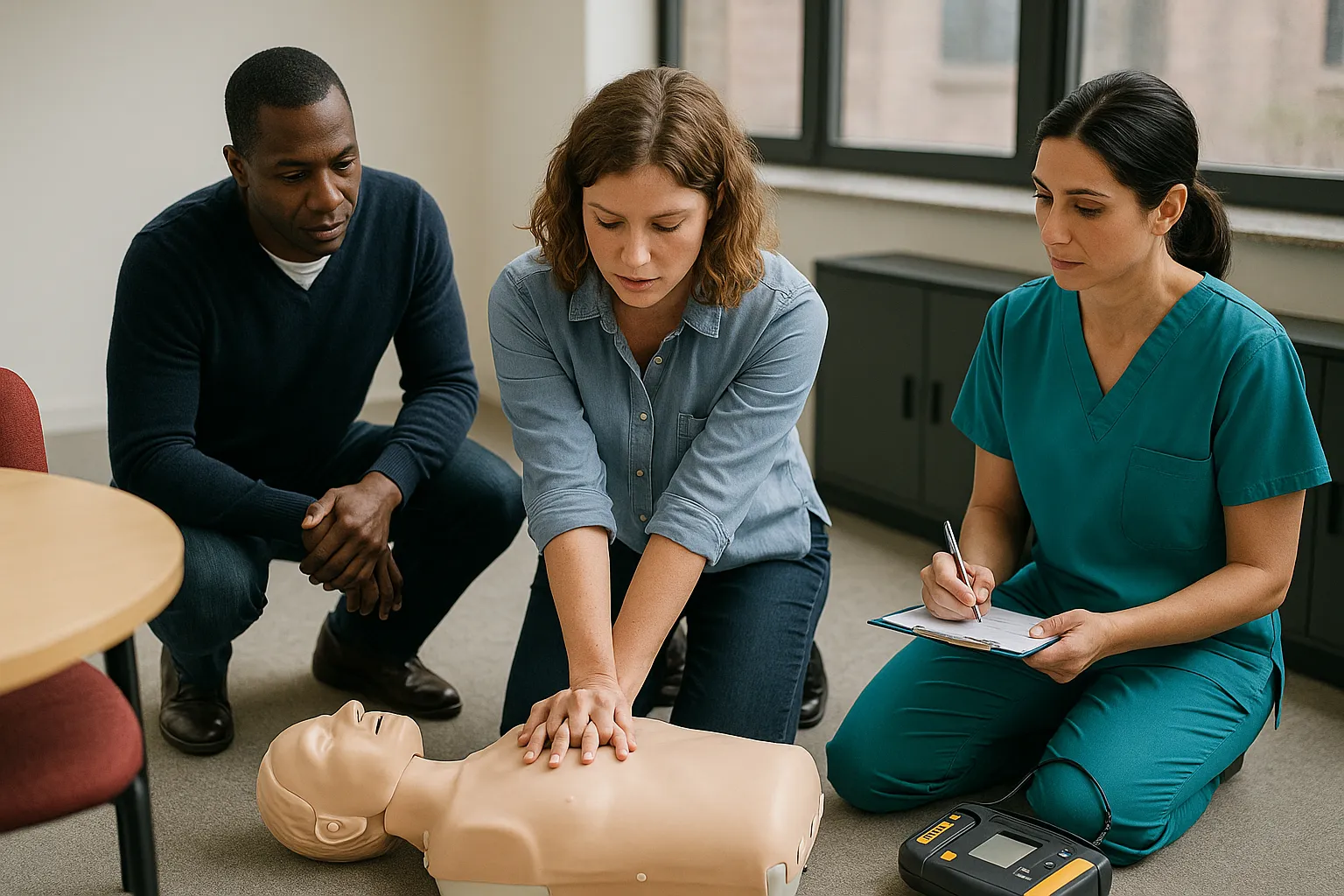
Unexpected situations can occur anywhere at home, at work, while travelling, or while engaging in leisure activities. Knowing what to do in those dire situations before expert medical assistance arrives might have a significant impact. Many people are reluctant to take action because they are afraid of making mistakes or don’t know how to react correctly. By substituting practical skills and confidence for hesitation, first aid education helps eliminate that ambiguity.
There is much more to learning first aid than just memorising protocols. It cultivates the capacity to remain composed, thoroughly evaluate circumstances, and offer suitable support until emergency services take over.
Recognising Emergency Circumstances
Emergencies frequently develop swiftly, leaving little time for reflection. The response can be delayed by panic and bewilderment, which is why appropriate training is so important. Participants in a first aid course Brisbane learn how to identify various medical situations, assess risks, and prioritise actions that protect both themselves and the wounded person.
Realistic scenarios are introduced during training, enabling students to answer with confidence rather than relying on speculation. It is simpler to respond effectively when every second counts, when one is familiar with emergency circumstances, thanks to this hands-on experience.
Learning Via Practical Experience
While reading about emergency care is beneficial, practising key skills fosters long-term confidence. In a supervised setting, first aid courses give students the chance to practice life-saving techniques while receiving constructive criticism and support from instructors.
Procedures, including wound care, burn management, fracture treatment, responding to choking occurrences, and helping people in medical emergencies, become second nature to participants. With repeated practice, these abilities become instinctive reactions instead of decisions that take a long time to make.
Learners are more confident in their capacity to offer prompt assistance when professional training and practical exercises are included.
Developing Life-Saving CPR Techniques
Cardiac emergencies need to be treated very quickly, and every minute that passes without help can drastically lower the likelihood of survival. Participants who have completed CPR Training Brisbane are better able to identify cardiac arrest and initiate cardiopulmonary resuscitation while they wait for rescue personnel.
Correct chest compression techniques, rescue breathing instructions when necessary, and the safe operation of automated external defibrillators are all common components of training. In a controlled environment, using these techniques reduces ambiguity and promotes quicker action in actual circumstances.
People can respond with purpose rather than fear because of the confidence that comes from learning CPR.
Improving Decision-Making
Making decisions is intimately related to confidence. In an emergency, people have to swiftly evaluate their surroundings, spot potential threats, and decide on the best course of action.
Instead of responding emotionally, structured training teaches individuals how to assess circumstances logically. Even in stressful situations, this method helps people think clearly and lessens terror.
Learners who comprehend emergency response priorities are more equipped to make judgements that enhance everyone’s safety.
Assisting Communities, Workplaces, And Families
The benefits of first aid expertise go beyond self-assurance. People with training make families, schools, sports teams, businesses, and public areas safer.
Community volunteers are more equipped to help in unforeseen situations, employees become important members of workplace emergency response teams, and parents can deal with childhood accidents more skilfully.
People gain useful abilities that help those around them after completing first aid and CPR courses. A safer atmosphere where more people are ready and willing to act in an emergency, rather than waiting for someone else to do so, can be created with the knowledge acquired.
Increasing Self-Assurance With Frequent Refreshers
When information stays up to date, confidence increases. As medical science progresses, emergency response protocols and first aid recommendations continue to change.
Refresher courses introduce new methods while reinforcing previously mastered ones. Frequent training also enhances muscle memory, improving the speed and accuracy of emergency reactions.
Periodically reviewing their skills makes people feel more prepared and less nervous when dealing with unforeseen circumstances.
Conclusion
Although there is rarely advance notice of emergencies, being prepared can make all the difference. First aid training improves decision-making, fosters practical skills, and gives students the self-assurance they need to act appropriately under duress. People can improve their ability to defend themselves and others around them by practising realistically, continuing their education, and regularly refreshing their skills. Spending time on first aid training is an investment in one’s own self-assurance, the safety of the community, and the capacity to significantly impact situations when they arise.